Berita, SDG 2025

138 Mahasiswa FIB Unpad Angkatan 2021 Penerima Beasiswa KIP-K Berhasil Lulus Tepat Waktu pada Akhir Tahun Ajaran 2024/2025

BANDUNG – Fakultas Ilmu Budaya Universitas Padjadjaran (FIB Unpad) mencatatkan prestasi gemilang dalam hal pemerataan pendidikan dan keberhasilan akademik. Sebanyak 138 mahasiswa angkatan 2021 penerima Kartu Indonesia Pintar Kuliah (KIP-K) dinyatakan lulus tepat waktu pada akhir tahun ajaran 2024/2025. Pencapaian ini tidak hanya mencerminkan kerja keras individu, tetapi juga keefektifan sistem pendukung yang dibangun oleh fakultas. Berdasarkan data administrasi akademik, dari total 427 mahasiswa FIB Unpad angkatan 2021 yang telah menyelesaikan studi, para penerima KIP-K menyumbang 32,3% dari total keseluruhan lulusan. Angka yang signifikan ini menunjukkan kontribusi besar program beasiswa pemerintah dalam mencetak lulusan perguruan tinggi. Dari 138 lulusan penerima KIP-K, mereka berasal dari tiga jalur seleksi masuk yang berbeda. Sebanyak 72 mahasiswa (52,2%) merupakan penerima KIP-K yang masuk melalui jalur SNBT (Seleksi Nasional Berdasarkan Tes). Sementara itu, 49 mahasiswa (35,5%) berasal dari jalur UTBK (Ujian Tulis Berbasis Komputer), dan 17 mahasiswa (12,3%) lainnya masuk melalui jalur SMUP (Seleksi Mandiri Universitas Padjadjaran). Komposisi ini mencerminkan distribusi kuota KIP-K yang diikuti oleh mahasiswa dari berbagai latar belakang seleksi. Keberhasilan ini tersebar di seluruh program studi di lingkungan FIB Unpad. Sastra Indonesia menjadi program studi dengan jumlah lulusan KIP-K tertinggi, yaitu 40 mahasiswa, diikuti oleh Sastra Arab dengan 26 mahasiswa, dan Sastra Sunda dengan 24 mahasiswa. Berikut adalah rincian lengkapnya:    Sastra Indonesia: 40 Mahasiswa    Sastra Arab: 26 Mahasiswa    Sastra Sunda: 24 Mahasiswa    Ilmu Sejarah: 11 Mahasiswa    Sastra Jepang: 11 Mahasiswa    Sastra Inggris: 8 Mahasiswa    Sastra Rusia: 8 Mahasiswa    Sastra Jerman: 6 Mahasiswa    Sastra Perancis: 4 Mahasiswa Keberhasilan ini tidak lepas dari komitmen FIB Unpad dalam memberikan pendampingan akademik yang inklusif, seperti konseling akademik, workshop penulisan skripsi, dan program mentoring yang dirancang untuk membantu seluruh mahasiswa, termasuk para penerima KIP-K, dalam mengatasi tantangan selama perkuliahan. Pencapaian ini diharapkan dapat memotivasi generasi berikutnya untuk memanfaatkan segala bentuk dukungan yang ada guna meraih kesuksesan akademik dan lulus tepat waktu. FIB Unpad berkomitmen untuk terus meningkatkan kualitas layanan dan pendampingan akademik guna mencetak lulusan yang unggul dan berkarakter.

Berita, SDG 2025

FIB Unpad Hosts Hybrid Public Lecture on SDGs for New Students and Community

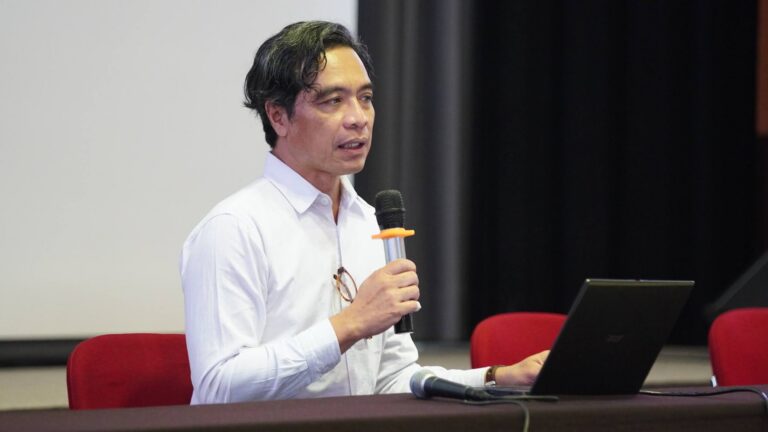
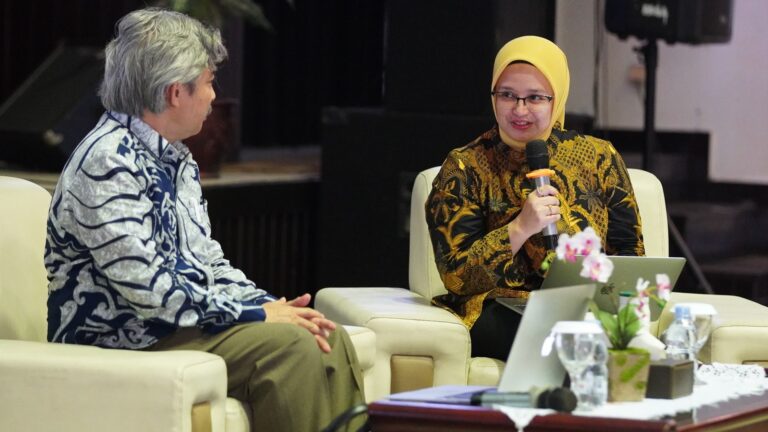
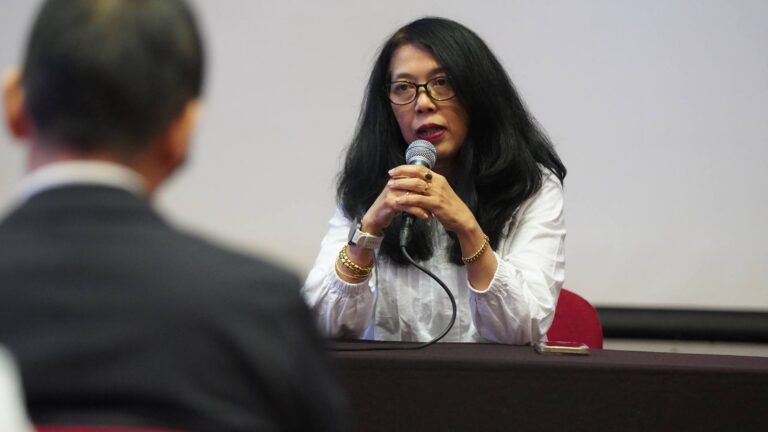
The Faculty of Cultural Sciences (FIB) Universitas Padjadjaran held a hybrid public lecture on August 13, 2025, marking the start of the 2025/2026 academic year for new students. The event, which was part of the faculty’s orientation program, explored the role of the Sustainable Development Goals (SDGs) in academic and community life, offering both students and the wider public valuable insights into how global goals can be localized in education and research. The keynote speaker, Mr. Bokhtar Bokozoda from the Japan International Cooperation Agency (JICA) Kyushu Center, shared his perspectives on the contributions of higher education institutions to the advancement of the SDGs. He encouraged students to actively integrate sustainability values into their daily practices and academic work, highlighting the broader social impact of education. “Everyone has their own contribution to make for the SDGs. By working together, we can create a better life for all—especially when we focus on high-quality education, which serves as the foundation for many other goals,” Mr. Bokozoda emphasized. He also underscored the transformative power of youth: “Students are not only learners but also agents of change. Your creativity, critical thinking, and dedication are essential for addressing pressing global challenges such as climate change, inequality, and cultural preservation.” Highlighting the importance of partnerships, Mr. Bokozoda added: “No single country or institution can accomplish the SDGs alone. Academic collaborations and international cooperation, like what we are experiencing here today, are crucial for building collective capacity to achieve sustainable progress.” Hybrid Access for Broader Participation What made this event particularly special was its hybrid format. In addition to the hundreds of new students who attended on-site, the lecture was also streamed online, enabling parents, alumni, and members of the wider community to take part in the session. This approach reflected FIB Unpad’s vision of inclusivity, allowing not only students but also the general public to engage in discussions on global sustainability. Student Engagement in Multilingual Dialogue The lecture drew strong enthusiasm from participants. In the lively Q&A session, students posed questions in Russian, Japanese, and English, demonstrating the multicultural and international orientation of FIB Unpad. Mr. Bokozoda, fluent in all three languages, responded directly, creating an engaging and inclusive exchange. Reinforcing FIB’s International Spirit By hosting this hybrid public lecture, FIB Unpad not only introduced its new students to the relevance of the SDGs in academic life but also extended the conversation to families and the broader society. This initiative underscores the faculty’s commitment to combining global perspectives with local engagement, preparing students to become responsible citizens and active contributors to sustainable development.

Berita, SDG 2025

FIB Unpad Publishes SDGs Report 2024–2025, Reinforcing Contribution to QS WUR Sustainability

The Faculty of Cultural Sciences (FIB) Universitas Padjadjaran has officially released its Sustainable Development Goals (SDGs) Report covering the period from September 2024 to September 2025. The report highlights FIB’s comprehensive initiatives in research, community service, academic development, international collaboration, and green campus practices, all of which contribute to Universitas Padjadjaran’s rising performance in the QS World University Rankings (WUR) Sustainability. Key Achievements International Collaboration and Best Practices Three lecturers — Hilman Fauzia Khoeruman, S.S., M.Phil., Dr. Taufik Ampera, M.Hum., and Rahmat Sopian, Ph.D. — participated in collaborative SDG programs with Kitakyushu University and JICA Japan, including beach clean-ups in Kyushu and waste-sorting walks in Bandung’s Tahura forest.These activities allowed FIB to learn and adapt best practices in sustainability, combining global knowledge with local action. Cross-Sectoral Dialogue On May 23, 2025, FIB Unpad joined a cross-sectoral dialogue at the SDGs Center Kitakyushu, Japan.Hilman Fauzia Khoeruman presented SDG-related academic data from FIB, connecting it to Unpad’s global standing in QS WUR Sustainability.Prof. Miyake of Kitakyushu University stated: “Academics and research are the foundation for advancing every single SDG.” Community Engagement and NGO Collaboration Students carried out clean-up initiatives inspired by global and local traditions — Kirei-kirei (Japan), Subotnik (Russia), and Sebersih (Sundanese) — in collaboration with NGOs, local farmer groups, and elementary schools in Jatinangor.Local farmer Pak Asep commented: “Since our harvests are allowed to be marketed on the FIB campus, we feel responsible to also care for its environment. This activity strengthens our bond with the faculty and the students.” Faculty-Led Community Service (PKM Dosen) FIB Unpad lecturers implemented 32 PKM programs across Sumedang (Jatinangor, Rancakalong, Cimanggung, Sumedang Selatan), representing four development models: Examples include: Notably, the PKM project led by Dr. Rasus Budhyono, M.Hum. developed the Nagarawangi Coffee Center, resulting in the launch of pakopian.com, a multilingual platform (Indonesian, English, Russian, Japanese) for global coffee marketing. Academic SDG Literacy On August 13, 2025, FIB hosted a public lecture on SDGs with Bokhtar Bokozoda from JICA Kyushu Center, where students enthusiastically participated and engaged in multilingual dialogue (Russian, Japanese, English). Green Campus Initiatives As part of its key SDGs performance, FIB Unpad has also introduced a series of green campus initiatives to promote sustainable practices on campus, including: These efforts demonstrate FIB Unpad’s integrated approach, ensuring that sustainability is not only practiced in external community programs but also embedded within the daily operations of the faculty. Strategic Impact on QS WUR Sustainability All PKM program titles, international collaborations, and green campus initiatives have been carefully designed to reflect the achievement of multiple SDGs, including: In her statement, Dean of FIB Unpad, Prof. Aquarini Priyatna, underlined the faculty’s commitment:“Our SDGs Report demonstrates that academic excellence and social responsibility must go hand in hand. Every PKM program title and initiative reflects not only FIB’s contribution to community development but also our alignment with the global SDG agenda. These achievements strengthen Unpad’s visibility in the QS WUR Sustainability ranking and show that culture, education, and sustainability are inseparable in shaping the future.”

Berita, SDG 2025

Culture of Care: FIB Unpad Students and Local Communities Practice Sustainability Together

The Faculty of Cultural Sciences (FIB) Universitas Padjadjaran has shown its commitment to the Sustainable Development Goals (SDGs) through a student-led community clean-up initiative. The activity, rooted in the spirit of volunteerism and care for the academic environment, reflects both local and global traditions of collective action. Students carried out the program under different cultural terms: in Japanese it is known as “Kirei-kirei”, in Russian as “Subotnik”, and in Sundanese as “Bebersih”—all emphasizing communal work for the sake of shared spaces. For FIB Unpad students, the clean-up was an expression of love and responsibility toward their faculty environment, while also fostering awareness of sustainability in daily practices. The program was not conducted by students alone. It also involved collaboration with non-governmental organizations (NGOs) that have partnered with FIB Unpad through various faculty research and community service (PKM) programs. Among them were local farmer groups and elementary schools in the Jatinangor area, who joined hands with the students in promoting environmental cleanliness and collective awareness. Pak Asep, a local farmer from Sumedang who has long partnered with FIB Unpad, emphasized the importance of shared responsibility: “For us, joining this clean-up is part of our duty. Since our harvests are allowed to be marketed on the FIB campus, we feel responsible to also care for its environment. This activity strengthens our bond with the faculty and the students.” One of the participating students also reflected on the initiative: “Doing Kirei-kirei, or Sebersih in our Sundanese tradition, is more than just cleaning. It is about building a sense of togetherness, responsibility, and contribution to the community we are part of. We want our campus to reflect our care for both culture and sustainability.”This initiative represents the integration of academic values, cultural traditions, and community collaboration as part of FIB Unpad’s effort to align its academic environment with the goals of sustainable development. By engaging students, NGOs, and local communities, FIB Unpad continues to foster holistic learning and practice-based approaches to sustainability, in line with the vision of strengthening education, partnerships, and community well-being.

Berita, SDG 2025

From Kyushu to Bandung: FIB Unpad and Kitakyushu University Share Best Practices for SDGs

The Faculty of Cultural Sciences (FIB) Universitas Padjadjaran has strengthened its commitment to the Sustainable Development Goals (SDGs) through international collaboration with Kitakyushu University and JICA Japan. The partnership bridges activities in both Japan and Indonesia, emphasizing hands-on practices as models of sustainability education. One of the key initiatives took place in Kyushu, Japan, where three lecturers from FIB Unpad — Hilman Fauzia Khoeruman, S.S., M.Phil., Dr. Taufik Ampera, M.Hum., and Rahmat Sopian, Ph.D. — joined a beach clean-up activity alongside students, volunteers, and partner institutions. The program not only focused on collecting trash but also introduced sustainable waste management methods. Participants carefully sorted waste into three categories of plastic—PET bottles, plastic bags, and mixed plastics—highlighting practical steps toward responsible consumption and environmental stewardship. Hilman Fauzia Khoeruman reflected on the experience: “By directly engaging in this clean-up and waste management activity, we gained valuable insights into how Japanese communities practice sustainability in daily life. These best practices are lessons that we hope to adapt and contextualize in Indonesia.” The collaboration extended to Indonesia, where Prof. Miyake from Kitakyushu University joined lecturers and students from FIB Unpad in a leisure walk through the Tahura Bandung forest trail. Along the route, participants collected and sorted plastic waste, turning the walk into an active sustainability practice. Prof. Miyake emphasized: “Best practices in sustainability cannot stay in theory alone. When we walk together, collect waste, and sort it responsibly, we show how small actions contribute to bigger goals. This is how SDGs become part of everyday life.” These activities represent not only environmental engagement but also academic exchange, as they are part of a broader program of international best practice sharing in SDGs implementation. Supported by Kitakyushu University and JICA Japan, the collaboration allows FIB Unpad to review comparative approaches and develop actionable strategies that align with global standards.Through this partnership, FIB Unpad is committed to ensuring that sustainability efforts are reflected in teaching, research, and community service, positioning the faculty as an active contributor to both local development and global SDG initiatives.

Berita, SDG 2025

FIB Unpad Lecturers Participate in International Collaboration on SDGs with Kitakyushu University and JICA Japan

The Faculty of Cultural Sciences (FIB) at Universitas Padjadjaran continues to strengthen its global engagement in advancing the Sustainable Development Goals (SDGs) through academic collaboration and international partnerships. From May 18 to May 29, 2025, three FIB lecturers—Hilman Fauzia Khoeruman, S.S., M.Phil., Dr. Taufik Ampera, M.Hum., and Rahmat Sopian, Ph.D.—participated in an intensive 10-day program in Japan focused on SDG management and data collaboration. This program was carried out in cooperation with Kitakyushu University and the Japan International Cooperation Agency (JICA) International Collaboration Association. The initiative aimed to foster knowledge exchange, research partnerships, and capacity building in monitoring and managing SDGs. During the program, two of the lecturers engaged in a series of discussions, workshops, and study sessions exploring strategies for integrating SDG principles into academic research and teaching at FIB Unpad. Key themes included data collection and measurement for SDG indicators, interdisciplinary approaches to sustainability, and strengthening the role of higher education institutions in policy development and community engagement. Reflecting on the experience, Dr. Taufik Ampera shared: “We have learned a great deal about SDG management in the context of academic institutions, which we hope to implement in our own faculty. This knowledge will help us strengthen the role of FIB Unpad in contributing to sustainable development through education, research, and community service.” Meanwhile, Bokhtar Bokozoda, one of the international collaborators, highlighted the broader significance of the program. “This activity is an opening for other collaborative initiatives that hold great potential. Together, we can further develop academic progress while paying close attention to the aspects of the SDGs. It is a promising start for future cooperation between our institutions.” The collaboration highlights FIB Unpad’s growing role in international academic networks for SDGs, emphasizing the importance of data-driven approaches to sustainable development. By participating in global initiatives, FIB Unpad aims to contribute to evidence-based policy recommendations, support community development, and prepare students to become active contributors to sustainability goals. This 10-day engagement with Kitakyushu University and JICA Japan marks a significant step for FIB Unpad in aligning its academic mission with international efforts toward the achievement of the SDGs, further demonstrating the faculty’s commitment to global partnership and interdisciplinary innovation.

Berita, SDG 2025

FIB Unpad Participates in Cross-Sectoral Dialogue on SDGs to Strengthen Academic Contribution and Global Ranking

The Faculty of Cultural Sciences (FIB) at Universitas Padjadjaran actively participated in a cross-sectoral dialogue on the Sustainable Development Goals (SDGs), a forum designed to bring together representatives from academia, government institutions, and non-governmental organizations (NGOs). The event highlighted the importance of collaborative action in addressing global sustainability challenges while also reinforcing the role of universities in driving SDG-related initiatives. The dialogue took place at the SDGs Center Kitakyushu, Japan, on May 23, 2025, and became one of the key activities in the ongoing partnership between FIB Unpad, Kitakyushu University, and JICA Japan. In this dialogue, Hilman Fauzia Khoeruman, S.S., M.Phil., a lecturer at FIB Unpad, delivered a presentation on SDG-related academic data at FIB Unpad. His presentation underlined how academic contributions, particularly in research, curriculum development, and community engagement, are directly connected to improving Universitas Padjadjaran’s performance in the QS World University Rankings (WUR) Sustainability. “The integration of SDGs into our academic practices not only benefits local communities and strengthens our role in policy development, but also contributes to enhancing Unpad’s global visibility,” Hilman emphasized during his talk. “By systematically documenting and presenting data on SDG engagement, we can ensure that Unpad’s efforts are recognized internationally, particularly in the QS WUR Sustainability metrics.” Adding to this, Prof. Miyake from Kitakyushu University highlighted the fundamental role of higher education in achieving sustainable development: “Academics and research are the very foundation for advancing every single SDG. Without knowledge production and critical inquiry, policy and practice will not be sustainable in the long run.” The forum itself was part of a series of SDG training programs organized through a collaboration scheme between FIB Unpad, Kitakyushu University, and JICA Japan. This joint effort focuses on equipping participants with the skills, knowledge, and collaborative networks necessary to implement sustainability initiatives both at the local and global levels. The dialogue also served as a platform for discussing strategies such as: Government representatives and NGO partners welcomed the academic perspective presented by FIB Unpad, recognizing that evidence-based research and academic collaboration are essential to designing effective policies and interventions. The event reflects FIB Unpad’s ongoing mission to link education, research, and community service with global sustainability frameworks. By actively engaging in cross-sectoral dialogues and international collaborations, the faculty seeks to position itself not only as a contributor to local community welfare but also as an important stakeholder in elevating Universitas Padjadjaran’s global sustainability profile.

Berita, SDG 2025

FIB Unpad Engages in Nagarawangi Coffee Management to Support Community Welfare and SDGs

The Faculty of Cultural Sciences (FIB) at Universitas Padjadjaran has taken an active role in advancing the Sustainable Development Goals (SDGs) through direct involvement in community-based initiatives. One of its current flagship programs is the Lecturer Community Service Program (PKM Dosen) titled: “Pengembangan Sentra Kopi di Desa Nagarawangi Rancakalong Kabupaten Sumedang: Peningkatan Literasi, Diversifikasi Produk, Kesadaran Jenama, dan Dokumentasi Budaya,”led by Dr. Rasus Budhyono, M.Hum. This initiative emphasizes FIB Unpad’s commitment to contributing not only to academic excellence but also to the economic empowerment and social welfare of local communities. By collaborating with coffee farmers and local stakeholders, the faculty provides insights and practical strategies that align with national and global agendas for sustainable development. As part of this program, FIB Unpad seeks to strengthen the position of Nagarawangi coffee in the market by focusing on digitalization and product innovation. One tangible outcome of this collaboration is the creation of pakopian.com, a digital platform dedicated to promoting and marketing Nagarawangi coffee. The website is accessible in four languages—Indonesian, English, Russian, and Japanese— making it possible for local coffee products to reach wider global markets. In line with the SDG framework, the involvement of FIB Unpad addresses several key aspects of policy and practice: Local farmer Sulaiman, who has been working in the coffee sector for nearly 20 years, expressed his optimism about the program. “We have cultivated coffee here for generations, but often faced difficulties in marketing and gaining recognition,” he shared. “With the support from FIB Unpad, especially through digitalization, we finally see a chance for Nagarawangi coffee to reach wider markets. This gives us hope for better income and a more secure future for our families.” A representative of the FIB Unpad team also underlined the importance of such collaboration. “Universities must not stand apart from society. By engaging with communities such as Nagarawangi, we create meaningful impact that supports both local livelihoods and global goals. Digital innovation is our main step to ensure that products like Nagarawangi coffee are not only sustainable but also competitive in today’s global market.” This initiative reflects FIB Unpad’s broader mission of linking research, education, and community service to the advancement of the SDGs, particularly in promoting inclusive economic growth, reducing inequalities, and fostering sustainable consumption and production patterns.

Berita, SDG 2025

FIB Unpad’s Literacy Efforts through Unpad Bermanfaat

Jatinangor, September 9th 2025 — By mid-2025, the Faculty of Cultural Sciences (FIB) Universitas Padjadjaran has carried out five flagship programs under Pengabdian Kepada Masyarakat (Community Service/PPM) and Kuliah Kerja Nyata (Community Service/KKN), focusing on literacy and the development of culture-based schools.  The first initiative is the “Developing Literacy Culture in the School of Culture” at SDN Citengah. Activities such as reading corners, poetry reading competitions, and reading festivals were held to foster children’s interest in books and nurture their creativity from an early age. The second initiative, also implemented in Citengah Village, is the “Child-Friendly Village Based on Digital Literacy” program. Through surveys, workshops, and cultural documentation, this program introduces digital literacy to children while encouraging them to be critical and responsible in using technology. The third program is “Enriching School Materials through Manuscripts as Cultural Documents and Literacy References,” which explores Sundanese manuscripts and introduces them as additional resources for students, linking academic learning with cultural heritage. The fourth is the “Development of the School of Culture in Citengah Village.” Conducted through collaboration between PPM and KKN, this initiative integrates local cultural values into school activities, giving students contextual learning experiences that also strengthen their cultural identity. Last but not least, the “Developing Digital Literacy Potential to Support the School of Culture” program provides digital skills training—covering information literacy, communication, online safety, and content creation. This equips students and the local community with practical skills to support both learning and cultural preservation. Through these five programs, FIB Unpad continues to contribute to accessible and meaningful education for local communities, while reinforcing its role as a university that benefits society, true to the spirit of Unpad Bermanfaat. By Dilla Maharani Putri

Scroll to Top