Author name: Ghina Nafsiya

Berita, SDG 2025

FIB Unpad Strengthens Community Empowerment through “Unpad Bermanfaat” Program in Sumedang

Sumedang, September 2025 – The Faculty of Cultural Sciences (FIB) at Universitas Padjadjaran continues to show its dedication to community service through the Unpad Bermanfaat program, which is now in its third year. Bringing together lecturers, students, and cross-faculty partners, the initiative has made notable contributions to sustainable development in villages throughout Sumedang Regency. The program focuses on four village development models: Empowering Villages through Local Wisdom A notable feature of the program is located in Desa Jatiroke, Jatinangor, which is currently being developed into a cultural tourism village. Initiatives include the installation of signage at the Teras Gunung Geulis tourist site, the promotion of the local coffee brand “Gugels,” and the revitalization of Sundanese arts such as pencak silat and singa depok. Furthermore, training sessions are being conducted for village officials to enhance their competencies in tourism management and promotional activities. In Desa Nagarawangi, teams provided digital marketing training to help local SMEs, especially in coffee and furniture production. A documentary about the village’s history and tourism potential was also created and shared online, highlighting the impact of digital storytelling in strengthening local identity. Meanwhile, Desa Sindulang has concentrated on eco-friendly agriculture. Farmers and youth groups were supported in developing organic vegetable businesses, partnering with supermarkets, and exploring food exchange programs to enhance children’s nutrition. The “Julang Food” initiative by women’s groups transformed surplus tomatoes into innovative processed products. In Desa Citengah, cultural literacy has been the focus. Programs include creating a Sekolah Budaya (Cultural School), preserving the traditional Songah musical instrument, and supporting community-based art performances. These initiatives not only protect cultural heritage but also enhance creative education for local youth. Collaboration across Disciplines The Unpad Bermanfaat program isn’t limited to FIB lecturers alone. Academics from the Faculty of Medicine, Agriculture, Industrial Agricultural Technology, Animal Husbandry, Communication, and Social and Political Sciences have collaborated on implementing the projects. This interdisciplinary approach ensures that solutions address multiple aspects of community development. With over 30 projects completed across Sumedang, FIB Unpad has demonstrated its role as an agent of change that connects academic knowledge with community needs. “Through these initiatives, we hope to create sustainable model villages where local wisdom, cultural richness, and modern innovation coexist to improve community welfare,” said Prof. Aquarini Priyatna, Dean of FIB Unpad. As the program progresses, FIB Unpad is dedicated to strengthening collaboration, expanding impact, and ensuring that Unpad Bermanfaat truly lives up to its name—delivering meaningful benefits to society.

Berita, SDG 2025

Unpad’s Patriot Expedition Contributes to the Development of Transmigration Areas in Manggarai Barat

Bandung, Indonesia — Universitas Padjadjaran (Unpad) reaffirms its commitment to community empowerment and sustainable development through its participation in the national Ekspedisi Patriot program. In 2025, Unpad was assigned to Manggarai Barat Regency, East Nusa Tenggara, to address socio-economic challenges in transmigration areas and support their transformation into centers of local growth. The Unpad expedition team, comprising lecturers, students, and alumni, will execute the program from September to December 2025. The mission concentrates on mapping natural resources, identifying key local commodities, and formulating strategic recommendations for sustainable development across short-, medium-, and long-term phases.  “Our responsibility goes beyond identifying existing problems. We are also dedicated to providing practical solutions and a comprehensive development framework that can serve as a reference for both government and local communities,” said Taufik Ampera, Leader of Unpad’s Patriot Expedition Team. The Regent of Manggarai Barat, Edistasius Endi, has expressed full support for the expedition, highlighting the program’s potential to boost economic growth and social progress in transmigration zones. Local authorities at the regency, subdistrict, and village levels are expected to actively work with Unpad to ensure the program’s successful implementation. As part of the government’s Ekspedisi Patriot initiative, Unpad’s contribution supports national efforts to promote equitable development across Indonesia. The program will deliver two main outputs: These deliverables aim to give policymakers practical insights and serve as a basis for sustainable regional development. This initiative demonstrates Unpad’s mission to combine academic excellence with meaningful community engagement. By connecting research and practical application, Unpad positions itself as a driving force for innovation and change at the community level. “Through Ekspedisi Patriot, Universitas Padjadjaran underscores its dedication to achieving sustainable prosperity in transmigration areas. This initiative reflects our ongoing commitment: Unpad for Indonesia, Unpad for the People,” concluded Taufik Ampera. With strong collaboration between Unpad’s Patriot Expedition team and the Manggarai Barat local government, the program is expected to transform transmigration areas into vibrant centers of economic and social growth. By identifying local strengths and providing a roadmap for sustainable development, the initiative aims to ensure that transmigration no longer poses a challenge. Instead, it becomes a driver of prosperity and opportunity for the community.

Berita, SDG 2025

FIB UNPAD Strengthens Japanese Language Competency with NAT-TEST: Your Pathway to Global Opportunities

Jatinangor, West Java — Universitas Padjadjaran, through its Language Center (Pusat Bahasa, Faculty of Cultural Sciences), is pleased to announce the availability of the NAT-TEST, a Japanese language proficiency examination officially endorsed by Senmon Kyouiku Publishing Co., Ltd., Japan. This examination provides an excellent opportunity for students, professionals, and language enthusiasts to validate their Japanese language skills and enhance their international mobility.  What NAT-TEST Offers The NAT-TEST evaluates three fundamental skills: Grammar/Vocabulary, Listening, and Reading Comprehension, mirroring the format and difficulty level of the Japanese Language Proficiency Test (JLPT).  There are five tiers — Level 5 (easiest) through Level 1 (most advanced). Levels 1 and 2 assess Reading and Listening abilities. Levels 3, 4, and 5 consist of three sections: Vocabulary, Grammar/Reading, and Listening. The examination is administered six times annually at Unpad’s Jatinangor campus.  Who Benefits, and Why Take It Registration Details & Important Dates Contact & Venue Universitas Padjadjaran advocates for any individuals seeking to enhance their Japanese language proficiency and certification to consider registering for the NAT-TEST. Participation not only confers a prestigious credential but also opens avenues to expanded academic, professional, and cultural opportunities. Unpad continues to uphold its commitment to delivering superior language services that support learners in succeeding within a globally interconnected environment.

Berita, SDG 2025

Mahasiswa Perempuan Capai 71.6% dari Total Populasi FIB Unpad (2023-2025)

BANDUNG – Data demografi mahasiswa Fakultas Ilmu Budaya Universitas Padjadjaran (FIB Unpad) pada periode 2023 hingga 2025 menunjukkan sebuah tren yang signifikan: dominasi mahasiswa perempuan di hampir semua jenjang pendidikan. Dari total 1.198 mahasiswa aktif, sebanyak 858 di antaranya atau 71.6% adalah perempuan, sementara mahasiswa laki-laki berjumlah 338 orang (28.2%). Data yang dirilis oleh Kantor Akademik dan Kemahasiswaan FIB Unpad ini memberikan gambaran jelas tentang komposisi gender di fakultas yang menaungi berbagai program studi humaniora ini. Komposisi ini terlihat konsisten baik di program reguler seperti Sarjana, Magister, dan Doktor, maupun di program vokasi. Jumlah mahasiswa perempuan tertinggi terlihat pada program Sarjana (S1), dengan jumlah mahasiswa perempuan mencapai 746 orang dibandingkan laki-laki yang berjumlah 306 orang. Ini berarti, 70.9% dari total mahasiswa S1 di FIB Unpad adalah perempuan. Tren serupa juga terjadi di jenjang Magister (S2), di mana perempuan menyumbang 75.8% dari total populasi (47 dari 62 mahasiswa). Pada jenjang Doktor (S3), persentase perempuan bahkan lebih tinggi, yakni 70% (14 dari 20 mahasiswa). Program Sarjana Terapan (D4) juga tidak jauh berbeda. Dari 62 mahasiswa, 51 di antaranya (82.3%) adalah perempuan, sementara laki-laki berjumlah 11 orang. Tingginya minat dan partisipasi perempuan dalam bidang ilmu humaniora dan budaya di FIB Unpad menjadi sebuah fenomena yang menarik untuk dicermati. Data ini menunjukkan bahwa bidang ilmu humaniora dan budaya memiliki daya tarik yang sangat kuat bagi kaum perempuan. FIB Unpad memandang hal ini sebagai sebuah potensi besar. Kami berkomitmen penuh untuk menciptakan lingkungan akademik yang inklusif, aman, dan mendukung bagi seluruh civitas akademika, tanpa memandang gender, untuk meraih prestasi terbaiknya. Komitmen ini diwujudkan melalui berbagai program, termasuk kebijakan anti-kekerasan seksual, konseling akademik, serta dukungan untuk organisasi dan penelitian yang digerakkan oleh mahasiswa perempuan. Populasi mahasiswa yang terdiri dari berbagai jalur masuk seperti SNBT, UTMB, SMUP, dan Mahasiswa Asing ini juga menunjukkan bahwa tren partisipasi perempuan terjadi secara merata dari berbagai latar belakang seleksi. Ke depan, FIB Unpad akan terus memantau dan menganalisis data ini sembari memperkuat program-program yang mendukung kesetaraan dan keadilan gender, memastikan bahwa setiap mahasiswa memiliki kesempatan yang sama untuk berkembang dan menjadi lulusan yang unggul dan berkarakter.

Berita, SDG 2025

FIB Unpad Highlights Sustainable Campus Development Through Kantin Inspirasa

Jatinangor, September 2025 — The Faculty of Cultural Sciences (FIB) at Universitas Padjadjaran proudly announces the development of Kantin Inspirasa. This new campus facility demonstrates Unpad’s commitment to sustainable planning, community empowerment, and strategic resource use. Built on a previously underused brownfield site, this canteen project has successfully transformed idle land into a functional, modern, and inclusive space for students, lecturers, and staff. The site where Kantin Inspirasa now stands was once an underused brownfield area, left dormant and unproductive within the Jatinangor campus. By repurposing the land, Universitas Padjadjaran demonstrates how sustainable campus development can optimize existing resources, reduce environmental impact, and revitalize unused spaces.  Beyond its environmental benefits, Kantin Inspirasa provides notable social and cultural advantages to campus life. The facility acts as a gathering spot where students, faculty, and visitors can come together not only to dine but also to have conversations, share ideas, and build a stronger sense of community. The canteen offers a variety of food options at affordable prices, creating a space that is both functional and inclusive. It also features comfortable seating areas and open spaces designed to promote interaction, creativity, and collaboration among members of the academic community.  Kantin Inspirasa also promotes economic empowerment by offering opportunities for local food vendors and small businesses to operate within the facility. This supports Unpad’s mission to strengthen community partnerships and boost regional economic development while upholding high standards of quality and sustainability. The project demonstrates Universitas Padjadjaran’s commitment to the Sustainable Development Goals (SDGs), especially SDG 11 (Sustainable Cities and Communities) and SDG 12 (Responsible Consumption and Production). By revitalizing brownfield land and repurposing it for student-focused use, Kantin Inspirasa exemplifies sustainable and innovative campus planning. The success of Kantin Inspirasa is expected to serve as a model for future infrastructure projects at Universitas Padjadjaran. With many campuses across Indonesia facing challenges in managing land and facilities, Unpad hopes this initiative can act as a reference for how universities can balance practical needs with sustainability and long-term planning.  By transforming a neglected site into a productive facility, Unpad reaffirms its identity as a university that innovates for both present and future generations. The presence of Kantin Inspirasa signifies not only the creation of a new dining space but also a commitment to building a campus environment that is inclusive, sustainable, and inspiring. With Kantin Inspirasa now operating as a vibrant part of campus life, Universitas Padjadjaran continues to demonstrate its role as a pioneer in sustainable academic development. This initiative highlights that campus facilities can go beyond their basic functions: they can shape culture, strengthen community ties, and embody values of innovation and responsibility.

Berita, SDG 2025

Tahun 2025 Tercatat 528 Mahasiswa FIB Unpad Menerima Dana Bantuan Pendidikan Non KIP-K

BANDUNG – Fakultas Ilmu Budaya Universitas Padjadjaran (FIB Unpad) terus memperkuat komitmennya dalam mendukung keberlangsungan studi mahasiswa melalui berbagai program bantuan pendanaan. Pada tahun 2025, tercatat sebanyak 528 mahasiswa berhasil memperoleh dana bantuan pendidikan dari berbagai sumber selain KIP-K, yang berasal dari mitra korporasi, pemerintah daerah, yayasan, dan program internal kampus. Berdasarkan data dari Kantor Akademik dan Kemahasiswaan FIB Unpad, dari total 3.923 mahasiswa aktif di fakultas tersebut, penerima bantuan non KIP-K ini menyumbang 13,5% dari total populasi mahasiswa. Angka ini semakin signifikan ketika digabung dengan penerima KIP-K angkatan 2025 yang berjumlah 74 mahasiswa, yang membawa total keseluruhan mahasiswa penerima bantuan menjadi 602 mahasiswa atau 15,3% dari total mahasiswa aktif. Keberagaman sumber bantuan menjadi ciri khas dari program pendanaan di FIB Unpad. Bantuan non KIP-K tersebut berasal dari lebih dari 15 jenis beasiswa dan bantuan biaya yang berbeda, mencakup: Selain untuk program Sarjana (S1), bantuan pendanaan juga diperuntukkan bagi mahasiswa Pascasarjana (S2/S3) melalui program seperti BPI Kemendikbudristek, Beasiswa PDDI, Beasiswa Pemprov Jabar, dan Beasiswa PMDSU. Fakultas secara aktif mengelola informasi beasiswa melalui unit Kantor Akademik dan kemahasiswaan, memastikan bahwa semua mahasiswa memiliki akses yang sama untuk meng-apply berbagai bantuan yang tersedia.Dengan adanya dukungan finansial yang beragam ini, diharapkan beban ekonomi mahasiswa dapat berkurang sehingga mereka dapat lebih fokus pada pencapaian akademik, pengembangan skill, dan penyelesaian studi tepat waktu. FIB Unpad berkomitmen untuk terus memperluas jaringan kemitraan dan meningkatkan jumlah penerima manfaat dari berbagai program bantuan pendidikan.

Berita, SDG 2025

138 Mahasiswa FIB Unpad Angkatan 2021 Penerima Beasiswa KIP-K Berhasil Lulus Tepat Waktu pada Akhir Tahun Ajaran 2024/2025

BANDUNG – Fakultas Ilmu Budaya Universitas Padjadjaran (FIB Unpad) mencatatkan prestasi gemilang dalam hal pemerataan pendidikan dan keberhasilan akademik. Sebanyak 138 mahasiswa angkatan 2021 penerima Kartu Indonesia Pintar Kuliah (KIP-K) dinyatakan lulus tepat waktu pada akhir tahun ajaran 2024/2025. Pencapaian ini tidak hanya mencerminkan kerja keras individu, tetapi juga keefektifan sistem pendukung yang dibangun oleh fakultas. Berdasarkan data administrasi akademik, dari total 427 mahasiswa FIB Unpad angkatan 2021 yang telah menyelesaikan studi, para penerima KIP-K menyumbang 32,3% dari total keseluruhan lulusan. Angka yang signifikan ini menunjukkan kontribusi besar program beasiswa pemerintah dalam mencetak lulusan perguruan tinggi. Dari 138 lulusan penerima KIP-K, mereka berasal dari tiga jalur seleksi masuk yang berbeda. Sebanyak 72 mahasiswa (52,2%) merupakan penerima KIP-K yang masuk melalui jalur SNBT (Seleksi Nasional Berdasarkan Tes). Sementara itu, 49 mahasiswa (35,5%) berasal dari jalur UTBK (Ujian Tulis Berbasis Komputer), dan 17 mahasiswa (12,3%) lainnya masuk melalui jalur SMUP (Seleksi Mandiri Universitas Padjadjaran). Komposisi ini mencerminkan distribusi kuota KIP-K yang diikuti oleh mahasiswa dari berbagai latar belakang seleksi. Keberhasilan ini tersebar di seluruh program studi di lingkungan FIB Unpad. Sastra Indonesia menjadi program studi dengan jumlah lulusan KIP-K tertinggi, yaitu 40 mahasiswa, diikuti oleh Sastra Arab dengan 26 mahasiswa, dan Sastra Sunda dengan 24 mahasiswa. Berikut adalah rincian lengkapnya:    Sastra Indonesia: 40 Mahasiswa    Sastra Arab: 26 Mahasiswa    Sastra Sunda: 24 Mahasiswa    Ilmu Sejarah: 11 Mahasiswa    Sastra Jepang: 11 Mahasiswa    Sastra Inggris: 8 Mahasiswa    Sastra Rusia: 8 Mahasiswa    Sastra Jerman: 6 Mahasiswa    Sastra Perancis: 4 Mahasiswa Keberhasilan ini tidak lepas dari komitmen FIB Unpad dalam memberikan pendampingan akademik yang inklusif, seperti konseling akademik, workshop penulisan skripsi, dan program mentoring yang dirancang untuk membantu seluruh mahasiswa, termasuk para penerima KIP-K, dalam mengatasi tantangan selama perkuliahan. Pencapaian ini diharapkan dapat memotivasi generasi berikutnya untuk memanfaatkan segala bentuk dukungan yang ada guna meraih kesuksesan akademik dan lulus tepat waktu. FIB Unpad berkomitmen untuk terus meningkatkan kualitas layanan dan pendampingan akademik guna mencetak lulusan yang unggul dan berkarakter.

Berita, SDG 2025

FIB Unpad Hosts Hybrid Public Lecture on SDGs for New Students and Community

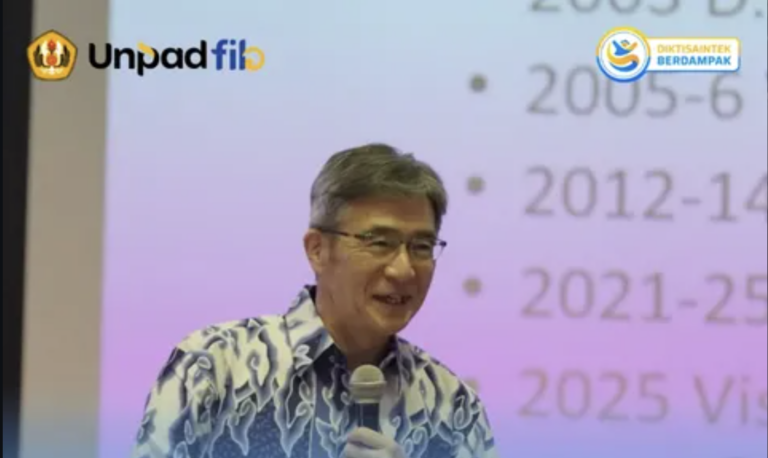
The Faculty of Cultural Sciences (FIB) Universitas Padjadjaran held a hybrid public lecture on August 13, 2025, marking the start of the 2025/2026 academic year for new students. The event, which was part of the faculty’s orientation program, explored the role of the Sustainable Development Goals (SDGs) in academic and community life, offering both students and the wider public valuable insights into how global goals can be localized in education and research. The keynote speaker, Mr. Bokhtar Bokozoda from the Japan International Cooperation Agency (JICA) Kyushu Center, shared his perspectives on the contributions of higher education institutions to the advancement of the SDGs. He encouraged students to actively integrate sustainability values into their daily practices and academic work, highlighting the broader social impact of education. “Everyone has their own contribution to make for the SDGs. By working together, we can create a better life for all—especially when we focus on high-quality education, which serves as the foundation for many other goals,” Mr. Bokozoda emphasized. He also underscored the transformative power of youth: “Students are not only learners but also agents of change. Your creativity, critical thinking, and dedication are essential for addressing pressing global challenges such as climate change, inequality, and cultural preservation.” Highlighting the importance of partnerships, Mr. Bokozoda added: “No single country or institution can accomplish the SDGs alone. Academic collaborations and international cooperation, like what we are experiencing here today, are crucial for building collective capacity to achieve sustainable progress.” Hybrid Access for Broader Participation What made this event particularly special was its hybrid format. In addition to the hundreds of new students who attended on-site, the lecture was also streamed online, enabling parents, alumni, and members of the wider community to take part in the session. This approach reflected FIB Unpad’s vision of inclusivity, allowing not only students but also the general public to engage in discussions on global sustainability. Student Engagement in Multilingual Dialogue The lecture drew strong enthusiasm from participants. In the lively Q&A session, students posed questions in Russian, Japanese, and English, demonstrating the multicultural and international orientation of FIB Unpad. Mr. Bokozoda, fluent in all three languages, responded directly, creating an engaging and inclusive exchange. Reinforcing FIB’s International Spirit By hosting this hybrid public lecture, FIB Unpad not only introduced its new students to the relevance of the SDGs in academic life but also extended the conversation to families and the broader society. This initiative underscores the faculty’s commitment to combining global perspectives with local engagement, preparing students to become responsible citizens and active contributors to sustainable development.

Berita, SDG 2025

FIB Unpad Publishes SDGs Report 2024–2025, Reinforcing Contribution to QS WUR Sustainability

The Faculty of Cultural Sciences (FIB) Universitas Padjadjaran has officially released its Sustainable Development Goals (SDGs) Report covering the period from September 2024 to September 2025. The report highlights FIB’s comprehensive initiatives in research, community service, academic development, international collaboration, and green campus practices, all of which contribute to Universitas Padjadjaran’s rising performance in the QS World University Rankings (WUR) Sustainability. Key Achievements International Collaboration and Best Practices Three lecturers — Hilman Fauzia Khoeruman, S.S., M.Phil., Dr. Taufik Ampera, M.Hum., and Rahmat Sopian, Ph.D. — participated in collaborative SDG programs with Kitakyushu University and JICA Japan, including beach clean-ups in Kyushu and waste-sorting walks in Bandung’s Tahura forest.These activities allowed FIB to learn and adapt best practices in sustainability, combining global knowledge with local action. Cross-Sectoral Dialogue On May 23, 2025, FIB Unpad joined a cross-sectoral dialogue at the SDGs Center Kitakyushu, Japan.Hilman Fauzia Khoeruman presented SDG-related academic data from FIB, connecting it to Unpad’s global standing in QS WUR Sustainability.Prof. Miyake of Kitakyushu University stated: “Academics and research are the foundation for advancing every single SDG.” Community Engagement and NGO Collaboration Students carried out clean-up initiatives inspired by global and local traditions — Kirei-kirei (Japan), Subotnik (Russia), and Sebersih (Sundanese) — in collaboration with NGOs, local farmer groups, and elementary schools in Jatinangor.Local farmer Pak Asep commented: “Since our harvests are allowed to be marketed on the FIB campus, we feel responsible to also care for its environment. This activity strengthens our bond with the faculty and the students.” Faculty-Led Community Service (PKM Dosen) FIB Unpad lecturers implemented 32 PKM programs across Sumedang (Jatinangor, Rancakalong, Cimanggung, Sumedang Selatan), representing four development models: Examples include: Notably, the PKM project led by Dr. Rasus Budhyono, M.Hum. developed the Nagarawangi Coffee Center, resulting in the launch of pakopian.com, a multilingual platform (Indonesian, English, Russian, Japanese) for global coffee marketing. Academic SDG Literacy On August 13, 2025, FIB hosted a public lecture on SDGs with Bokhtar Bokozoda from JICA Kyushu Center, where students enthusiastically participated and engaged in multilingual dialogue (Russian, Japanese, English). Green Campus Initiatives As part of its key SDGs performance, FIB Unpad has also introduced a series of green campus initiatives to promote sustainable practices on campus, including: These efforts demonstrate FIB Unpad’s integrated approach, ensuring that sustainability is not only practiced in external community programs but also embedded within the daily operations of the faculty. Strategic Impact on QS WUR Sustainability All PKM program titles, international collaborations, and green campus initiatives have been carefully designed to reflect the achievement of multiple SDGs, including: In her statement, Dean of FIB Unpad, Prof. Aquarini Priyatna, underlined the faculty’s commitment:“Our SDGs Report demonstrates that academic excellence and social responsibility must go hand in hand. Every PKM program title and initiative reflects not only FIB’s contribution to community development but also our alignment with the global SDG agenda. These achievements strengthen Unpad’s visibility in the QS WUR Sustainability ranking and show that culture, education, and sustainability are inseparable in shaping the future.”

Scroll to Top