Uncategorized

News, Uncategorized

Swargaloka Budaya as a Container for the Preservation of Sundanese Culture

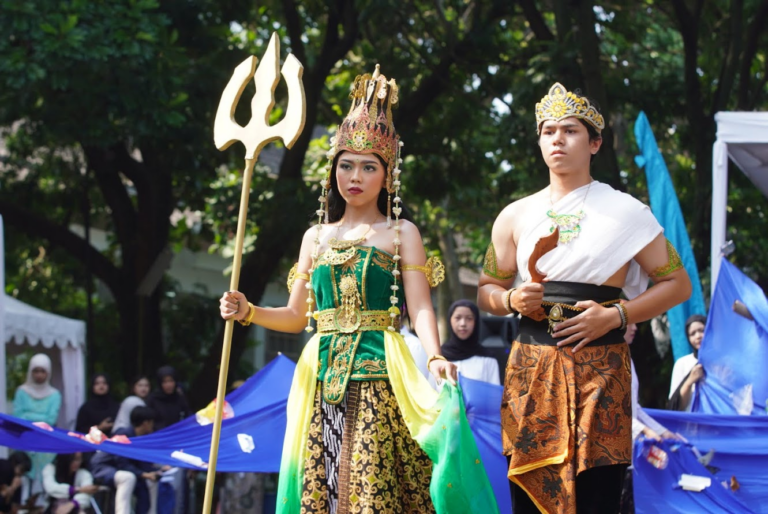
Jatinangor, June 28, 2024 – Every place on earth certainly has its own culture, and Tatar Sunda or Parahyangan is no exception. As students of the Faculty of Cultural Sciences at Universitas Padjadjaran (FIB Unpad) who set foot in Sundanese Tatar, Sundanese culture should be respected and preserved. Therefore, as a form of respect and preservation of Sundanese culture, FIB Unpad students who attended Pengantar Kebudayaan Sunda (Introduction to Sundanese Culture) lecture in the even semester 2023/2024 held an event called “Swargaloka Budaya”, an event designed and organized by all 2022 students from various departments at FIB Unpad which featured Sundanese culture.  The event was packaged in the form of a Beubeutian Festival, located in the PSBJ Hall. At the festival, various Sundanese arts were displayed by students from different departments. The arts displayed included Jaipong dance, folk songs, traditional games and “Si Kabayan” theater. Students were very excited and energetic to show the interesting and spectacular Sundanese cultural performances to the audience.  The word “Beubeutian” comes from the Sundanese language which means ‘tubers’. In this festival, various types of tubers such as cassava, sweet potatoes, taro, and peanuts are provided as well as various preparations made from tubers. The Beubeutian Festival can also be interpreted as a symbol of gratitude for the abundant crops. This is in line with the purpose of organizing the festival delivered by Dr. Taufik Ampera, M. Hum. as the coordinator of the Pengantar Kebudayaan Sunda.  “In the end, it is hoped that there will be awareness and love for the benefits of local food which can support the preservation of biodiversity by encouraging people to protect their food sources. This effort can also help boost culinary tourism which is increasingly popular in Indonesia,” he said in an online interview.  ​​ Swargaloka Budaya provided a number of benefits for all 2022 students who organized this event, as well as for the Unpad Academic Community who attended. This event was not only beneficial, but also managed to captivate the hearts of the Unpad community. The students filled the PSBJ Hall to watch art performances and try various foods from processed tubers presented at booths from each department. The students responded to the event with great enthusiasm for the organization of this event. There were various testimonials and opinions expressed by the students, one of which was from Anevia Bakone (Evi), a student of the French Study Program. “This festival is really cool! I got to know the ins and outs of West Java culture from this festival. I also found out about various kinds of processed sweet potatoes that can be made from simple, but interesting and delicious food ingredients. I could also see Sundanese culture such as Jaipong and songs. I hope that this festival can take place next year, where the message and purpose can be conveyed and students of class 2023 can get to know Sundanese culture better,” said Evi. Swargaloka Budaya closed with the reading of the winner nominations from various categories of lecturer assessment, also involving judges from the Faculty of Cultural Sciences lecturers. The following are the various categories of assessment from the lecturers along with the winners: Presentation/Video Category Rank I: Arabic Study Program Second place: French Study Program  Third place: Japanese Study Program Art Performance Category First Place: Arabic Study Program  Second place: Indonesian Study Program  Third place: Sundanese Study Program Variety of Dishes Category First Place: French Study Program Second Place: Arabic Study Program Third Place: Indonesian Study Program Poster Category 1st place: German Study Program Second Place: History Study Program Third Place: Indonesian Study Program Best Costume Category for Men Cahya Pratama (Japanese Study Program) Female Best Costume Category Nanda Azzahra (Indonesian Study Program) Best Booth Category  Rank I: Arabic Literature Second Place: Indonesian Study Program Third Place: Japanese Study Program Rowdiest Study Program Category Russian Literature Study Program Most Excited Study Program Category English Study Program Category This festival is not only a requirement for the final assessment of the Pengantar Kebudayaan Sunda Course, but also provides its own benefits and impressions for the Academic Community of FIB Padjadjaran University. In the future, Dr. Taufik hopes that FIB can organize cultural festivals regularly as an evaluation of learning and preservation of culture itself. Writer: Yohanes William IvakdalamTranslator: Jauza Maryam Mumtazah

News, Uncategorized

Caring for the Inclusiveness of Education for Persons with Disabilities, Unpad Launches EmpowerID Program

Jatinangor, West Java – Education should be a privilege that every individual is entitled to in life. People with disabilities are no exception.  In line with the realization of educational inclusiveness, Universitas Padjadjaran collaborates with Glasgow Caledonian University (GCU) in establishing a program entitled “Enhancing Disability-Inclusive Education in Indonesian Universities (EmpowerID)”. The program was attended by two GCU academic staff, Dr. Katie Thomson and Ms. Lisa Forrest at Unpad Jatinangor Campus on April 21-26.  Prior to the visit from two GCU staff, Universitas Padjadjaran has visited Glasgow Caledonian University last March. This aims to increase capacity and learning in efforts to serve students and staff with disabilities through staff and facilities at the University.  The visit to Universitas Padjadjaran was organized in the form of a workshop with relevant stakeholders at Universitas Padjadjaran, such as the disability services task force, students with disabilities, the learning support office, and the chairpersons of study programs.  Director of Education and Internationalization of Universitas Padjadjaran, Mohamad Fahmi, S.E., M.T., Ph.D., explains that the EmpowerID program is intended as a foundation for the establishment of a permanent and adequate disability service unit within Unpad. The goal of this program is to create a friendly and flexible academic environment for students with disabilities. “EmpowerID is not only about making our campus more flexible, but also about strengthening the values of equality, justice, and respect in our community. This initiative is proof of our commitment to ensuring that every student has the same opportunity to succeed,” Fahmi said.  The main area that EmpowerID focuses on is the integration of assistive technology to help students with disabilities in teaching and learning activities, such as software that helps with visual and auditory activities. On the other hand, programs are also needed for improving the academic success performance and social integration of students with disabilities, coaching staff and students regarding disability sensitivity, and vigorous promoting of understanding and interacting in the campus environment. In addition to the Director of Education and Internationalization of Universitas Padjadjaran, the visit of two GCU Disability Service staff was also warmly welcomed by the Head of the Unpad Disability Service Task Force, Dr. Eng. H. Boy Yoseph Cahya Sunan Sakti Syah Alam, ST, MT. Boy says that campus success is not necessarily measured by academic achievement, but also supported by the inclusiveness of education and social interaction in the campus environment for all its members. “We, Universitas Padjadjaran as a progressive university, see the importance of the EmpowerID program in serving students with disabilities. The growing awareness of inclusion within Universitas Padjadjaran is an important milestone to create an inclusive learning environment. We are committed to empowering individuals with disabilities, ensuring equal access to education, career opportunities, access to healthcare, and full participation in community life,” says Boy.  A bright and useful future for society is always the dream of every human being. Therefore, social interaction and the acquisition of a good education should be a concern and target for all elements of society.  Writer: Maria Imanuella Dewi SekartajiTranslator: Jauza Maryam Mumtazah

News, Uncategorized

Staff Statistics at the Faculty of Social Sciences, Universitas Padjadjaran: Composition and Roles

Faculty of Social Sciences (FIB) Universitas Padjadjaran is one of the faculties committed to providing a productive and supportive academic environment. To achieve this goal, FIB is supported by a diverse team of staff members, who contribute significantly in various operational and academic aspects. In 2023, FIB Unpad had a total of 185 employees. This number consists of several groups with different roles: – 116 Lecturers: As an integral part of the faculty, these lecturers are responsible for teaching, conducting research, and supervising students. They play a key role in the academic and intellectual development of FIB. – 49 Administrative Personnel: Administrative and technical staff who support various operational and administrative activities in the faculty. They ensure the smooth running of daily academic and administrative procedures. – 14 Outsourced: Outsourced staff at FIB perform various functions, such as providing security, sanitation, and other services that support the campus environment. – 6 Trade Unions: Trade union representatives play a role in fostering employee welfare and ensuring that their rights are respected. This employee composition reflects the diversity of roles and responsibilities that are present in FIB, and demonstrates the faculty’s efforts in providing the necessary support for academic and operational success. With this diverse group of staff, FIB Unpad is able to function efficiently and continuously strive to achieve high academic and operational standards. Writer: Gilang JanuarsyahTranslator: Dhia Anaulva Putri

News, Uncategorized

World Class University Sundanese Study Program: Sundanese Manuscripts and Studies

As an effort to implement the Decree of the Minister of Education and Culture Number 83/P/2020 dated January 24, 2020, concerning International Accreditation Institutions, the Sundanese Study Program held a public lecture by inviting a speaker from Universitat Hamburg, Dr. Dick van der Meij. In his public lecture, Dr. Meij presented material on the tracing of Sundanese manuscripts and their importance. According to Dr. Meij, the number of Sundanese manuscripts is estimated to reach tens of thousands. However, the existence of these manuscripts is still scattered in various institutions both government and individuals. In this case, further exploration needs to be done because there are so many cultural elements that can be explored and researched. As for general knowledge related to manuscripts and their contents, it needs to be emphasized that the treasures of literature remain sustainable and beneficial. In connection with this, the position of Sundanese Study Program students benefits from their knowledge of script and language. This can be used as an asset to explore what is contained in manuscripts, especially Sundanese manuscripts. Regarding further manuscript studies, Dreamsea Universität Hamburg is present to help restore and digitize existing manuscripts. In addition, the problem with manuscript research is that researchers focus too much on what is contained in the text. Meanwhile, many small details of manuscripts such as title writing, ornaments, marginal notes, colophons, and so on are often not given much attention. In fact, this can actually be researched and explored further to open up opportunities for new knowledge. Small details in manuscripts play an important role in determining whether a manuscript is original or not. The differences in the writing of each manuscript open up opportunities to conduct research on writings that differ from one manuscript to another. The object is simply all manuscripts in Sunda. Another opportunity is the writing of colophons that combine Sundanese and Javanese characters as well as the letters that form them. Sometimes the manuscripts circulating abroad do not reflect the actual life in the community. It is possible that the manuscripts were made for a specific purpose, not the result of traditional culture. If we look at the existing manuscripts, the original manuscripts should be preserved. Manuscripts that circulate for specific requests and purposes (ordered manuscripts) are not very important because they reduce the essence of the actual existence of the manuscripts. Therefore, inventory and digitization efforts are very important, considering the existence of Sundanese manuscripts can simply disappear if not immediately preserved.  Furthermore, Dr. Dick van der Meij’s presentation in the Sundanese Study Program public lecture was responded to by Dr. Elis Suryani Nani Sumarlina, the Coordinator of BKU Philology of Sundanese Study Program FIB Unpad and Sundanese Study Program students also filled the lecture’s discussion session enthusiastically. The discussion that has been carried out leads to preservation efforts and further research related to existing Sundanese manuscripts. With the implementation of this public lecture, the entire Sundanese Study Program community hopes to provide useful knowledge to improve and excite students in Indonesia to conduct studies and research in the field of literature. Hopefully, the cooperation that has been carried out will be a way for the Sundanese Study Program to achieve international recognition. Writer: Ade Irma S & Kiki NurussalamTranslator: Jauza Maryam Mumtazah

News, Uncategorized

FIB Unpad’s Chinese Language and Culture Study Program Collaborates with Huabao Industrial Park

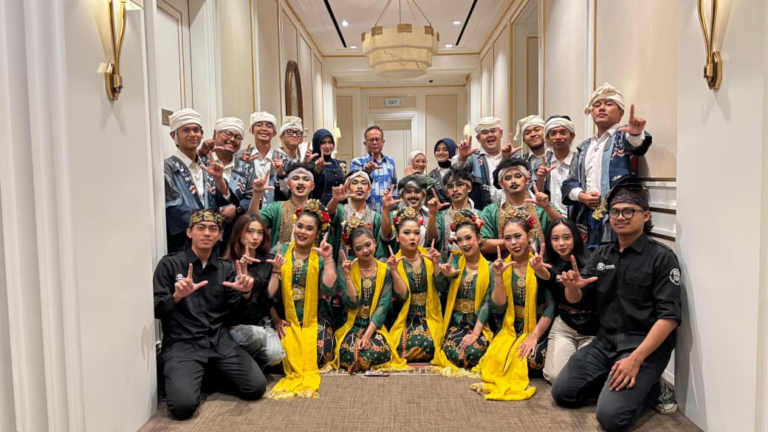
大家好! On Wednesday, September 20 2023, Indonesia Huabao Industrial Park (IHIP) visited the Faculty of Cultural Sciences (FIB) Universitas Padjadjaran (Unpad). The visit was carried out in order to sign a cooperation agreement between FIB Unpad and Indonesia Huabao Industrial Park (IHIP) as well as the introduction of IHIP to students of the Chinese Language and Culture study program of FIB Unpad. Indonesia Huabao Industrial Park (IHIP) is a company engaged in the Management of Nickel Smelter-Based Industrial Estate located in Topogaro Village, West Bungku District, Morowali Regency, Central Sulawesi Province. Cooperation between the two parties is established in the form of HR recruitment, student internship programs, and teaching practitioner procurement programs. IHIP’s visit to FIB Unpad was received by the dean of FIB Unpad, Professor Aquarini Priyatna, the head of FIB Internationalization Unit, Hilman Fauzia Khoeruman, the head of the Chinese Language and Culture study program, Dr. Ekaning Krisnawati, and lecturers and students of the Chinese Language and Culture study program. FIB Unpad hopes that the collaboration will improve the reputation and quality of their faculty, as well as facilitate internships for students as one of the mandatory activities during their studies and help IHIP itself in fulfilling quality human resources. Writer: Uray AfrinaTranslator: Jauza Maryam Mumtazah

News, Uncategorized

FIB Unpad Accepts More than 800 New Students

Friday, August 25, 2023, an admission ceremony for new students of the Faculty of Cultural Sciences (“Fakultas Ilmu Budaya” or FIB) Universitas Padjadjaran was held in the PSBJ hall. The Dean of the Faculty of Cultural Sciences Universitas Padjadjaran, Prof. Aquarini Priyatna led the ceremony to admit new students of FIB Unpad for the 2023/2024 academic year. The number of new FIB Unpad students accepted in 2023 is 837 people with the following details: Indonesian Study Program 105 people, Sundanese Study Program 77 people, History 114 people, English Study Program 124 people, French Study Program 60 people, Japanese Study Program 102 people, Russian Study Program 45 people, German Study Program 47 people, Arabic Study Program 96 people, D4 Chinese Study Program 37 people, Master of Arts in Literature 5 people, Master of Arts in Cultural Studies 4 people, Master of Humanities in Linguistics 7 people, Doctor of Literary Studies 14 people. The new student admission ceremony took place solemnly and ran smoothly, thanks to the support of various parties involved. This PMB was also attended by FIB Unpad managers, professors, lecturers, and other academicians. In her speech, Prof. Aquarini Priyatna said welcome and congratulations to the new students of FIB Unpad 2023, and explained that from now on new students have officially become part of a family that has a tradition of learning, researching and serving the community based on “Ngakar di Sarakan, Punjuldi Buana.” Prof. Aquarini also reminded that the struggle for new students to be accepted at the FIB Unpad is not easy because they have to go through such a competitive selection. The new students are people who are chosen through selection mechanisms at the national and university levels. Therefore, we advise new students to be grateful for the blessing, by doing their best and seriously following the learning process at FIB Unpad, because new students are lucky people who are given the opportunity to study at the university level, especially at Unpad which has now become their alma mater. This time, PMB was closed with a flashmob that was followed by all parties present, including the leaders of the Faculty of Cultural Sciences, Universitas Padjadjaran. The enthusiasm of new students during the flashmob added to the joy of closing PMB this time and gave the impression that there are times when we are serious about academic matters, there are also times when we have fun together and share happiness. Writer: Tim Media FIB Unpad Translator: Jauza Maryam Mumtazah

News, Uncategorized

Faculty of Language and Arts (FBS), HKBP Nommensen University Medan (UNH) Visits Faculty of Cultural Sciences Unpad to Study Accreditation

A delegation from the Faculty of Language and Arts (FBS), HKBP Nommensen University Medan (UNH) visited the Faculty of Cultural Sciences, Universitas Padjadjaran on Tuesday, July 5, 2022 to exchange ideas and exchange experiences in an effort to upgrade accreditation scores. The event was held in the Hall of the Center for Japanese Studies (PSBJ) FIB Unpad and guided by Taufik Ampera as the Manager of Research, Cooperation, and Innovation FIB Unpad. The Dean of FIB Unpad, Prof. Aquarini Priyatna delivered her speech, followed by the Dean of FBS UNH, Prof. Junita Batubara. On this occasion, the Head of English Literature Study Program FIB Unpad, Dr. Ari J. Adipurwawidjana elaborated the quality control strategy and efforts to increase the accreditation rating. In the presentation, it was explained that the English Literature Study Program of FIB Unpad has pioneered the conversion of accreditation from A (Very Good) to Excellent (Unggul). This study program that has just successfully maintained its A rating in June 2022 is also preparing to be internationally accredited. The Head of English Literature’s presentation was supported by information from Lestari Manggong, M.A. who had previously been the Head of the Accreditation Team that brought the study program to receive a commendable rating. The Head of the English Literature Study Program, FBS UHN, Rony Sembiring, M.Hum also provided an explanation on the various efforts possible to ensure and improve the quality of higher education services. Furthermore, Tri Bigrit Cleveresty, Head of the Quality Control Unit of FIB Unpad also explained the quality control policy both at FIB and Unpad and the instruments utilized. After that, Dra. Emmi Simangunsong, explained the quality control efforts implemented at UNH. The event ended with a discussion about collaboration opportunities that can be carried out by the two higher education institutions, which include student exchanges as well as collaboration in performing arts, research, and organizing student activities. Sandya Maulana, one of the lecturers of English Studies FIB Unpad who is also the editor of Metahumaniora journal, also invited UNH lecturers to become contributors. Meanwhile, Lestari, who is currently serving as Secretary I of the Association of English Study programs throughout Indonesia or English Studies Association in Indonesia (ESAI), invited the FBS UNH English Literature Study Program to become a member of the organization which will hold a Congress in November 2022 in Medan. The FBS UNH group, consisting of 9 people, had visited the Indonesian Institute of Arts and Culture (ISBI) in Bandung the previous day. After the visit to FIB Unpad, the FBS UNH team proceeded to watch ISBI’s performance at the West Java Cultural Park in Dago, Bandung. Writer: Tim Media FIB UnpadTranslator: Dhia Anaulva Putri

News, Uncategorized

History Study Program Public Lecture “How to Celebrate a sīma Foundation Epigraphy meets Food History in 10th-century Java” with Prof. Dr. Arlo Griffiths

Universitas Padjadjaran History Study Program hosted a public lecture held at the PSBJ Hall, Faculty of Cultural Sciences. The activity brought in an expert, a guest lecturer named Prof. Dr. Arlo Griffiths who is a Professor of Southeast Asian History from the French Research Institute, Ecole Francaise D’Extreme-Orient (EFEO) and is moderated by Fadly Rahman, M.A (history lecturer). The public lecture which began at 10.00 WIB was officially opened by the dean of the Faculty of Cultural Sciences, Prof. Aquarini Priyatna, M.A., M.Hum., PhD and attended by lecturers of the History Study Program.  In giving his presentation entitled “How to Celebrate a sīma Foundation Epigraphy meets Food History in 10th-century Java” Prof. Arlo explained various findings about culinary matters in ancient Javanese society, especially in the X century AD. He obtained these findings from various sources, including: Temple Reliefs, Inscriptions and Inscription Slabs. Some of them are found in the Borobudur Temple Relief. In addition, the same findings are also found in inscriptions, including the Paradah I, Sangguran, and Masahar inscriptions. As for the Inscription Slabs, some of them are contained in the Anjatan, Anglayang, and Alasantan Inscription Slabs. In these sources, it was found that not only culinary dishes were found, but also food processing techniques, various dishes, flavors, various spices to cooking utensils used by the ancient Javanese community. Some of the culinary dishes that were widely eaten by the ancient Javanese community included fish dishes, such as Beong, Gurame, Gabus and Peda. It also includes vegetables and meat. Meanwhile for the common snacks, there are dodol and rice flour cakes. Furthermore, seasonings such as salt, onions, shrimp paste, candlenut, and galangal also became the main commodities in the seasoning of ancient Javanese cuisine. “This is proof that the treasures of Indonesian culinary art are old, special, distinctive, and rich,” he said. The public lecture ended with a discussion session and finished at 12.00. The presentation was ended by a plaque given by the Head of History Study Program, Dr. Miftahul Falah, M.Hum. to Prof. Arlo. Writer: FIB Media TeamTranslator: Firda Khoirunnisa

News, Uncategorized

Professor Marieke Bloembergen’s Public Lecture at Unpad History Study Program

History Study Program, Faculty of Humanities, Universitas Padjadjaran held an international public lecture with Professor Marieke Bloembergen from Leiden University, the Netherlands, on Monday, May 15, 2023. Professor Marieke Bloembergen is a professor of heritage and postcolonial studies at Leiden University. Her research focuses on the production of cultural knowledge in colonial and postcolonial Indonesia in local dimensions and global relations.  In the public lecture held at the Hall of the Center for Japanese Studies (PSBJ), Professor Marieke gave a lecture entitled “Unsettling Colonial Knowledge. ‘Greater India’”, Transnational Scholarly Networks and Indology in/on Indonesia (1930s-1960s). Professor Marieke raised the main question of colonialism in terms of academic knowledge production. According to her, Indonesia has been part of knowledge production and knowledge networks within Asia and the world for centuries. In the context of colonial knowledge production, Indonesia has been studied by Western scholars, creating a research institute on Indonesia called Indology. Indology was not only intended for Dutch people who wanted to learn about Indonesia—to later become colonial employees—but also became an academic achievement for Indonesians themselves, such as Hoesein Djajadiningrat and Ngabehi Poerbatjaraka. In terms of knowledge production, although the majority of Indonesians are Muslims, Indonesia is strongly identified with Hindu-Buddhist culture as seen from Western scholars’ research on cultural sites, as well as objects brought and displayed in museums in Europe. This indicates that India’s influence in Indonesia is very strong in the context of both cultural heritage and cultural diplomacy. This reinforcement continues in the form of education and research diplomacy between India and Indonesia after independence. In another context, Professor Marieke also explained that Indonesia has a local genius in the form of a knowledge system that existed before the arrival of foreign influences, such as India, China, Arabia and Europe. Professor Marieke’s presentation received a positive response from the discussion attendees, which was participated by several lecturers of the History Study Program and dozens of students from two batches. Professor of History at Universitas Padjadjaran, Professor Kunto Sofianto appreciated that Professor Marieke’s lecture added a new understanding of Indonesian history, especially in the colonial period. According to him, “Students need to be given a new paradigm, perspective, and scope in understanding colonial history. Moreover, students in the Unpad History Study Program produce many interesting and diverse studies”. Furthermore, Professor Kunto Sofianto commented on colonialization that provides good and bad sides for Indonesia. Although colonialism is strongly associated with negative meanings in the tradition of education in Indonesia, but on the other hand colonialism also provides a legacy in the form of technology and the development of cities in Indonesia. It is not surprising that in the past Bandung was known as the Parijs van Java, and Garut as the Swiss van Java.  Professor Marieke Bloembergen’s public lecture was the second public lecture in 2023 organized by the History Study Program. Previously, the History Study Program held a public lecture by inviting Arlo Griffiths, Professor of Southeast Asian History, École française d’Extrême-Orient (EFEO) in March 2023. The whole series of public lectures is part of the FIB World Class University Program which carries the theme “Ngakar di Saraan Punjul di Buana”. Writer: Budi Gustaman, S.S., M.A.Translator: Firda Khoirunnisa

News, Uncategorized

Dean of FIB Unpad as a Public Lecture Speaker on “Gender, Ideology, and Cultural Studies” at Udayana University

The Doctoral Program (S-3) of Cultural Studies at the Faculty of Cultural Sciences (FIB) Udayana University successfully held the first Public Lecture online on Monday, March 14. The lecture, which was opened by the Dean of FIB Unud, discussed the topic of “Gender, Ideology, and Cultural Studies”. Prof. Aquarini Priyatna, M.A, M.Hum., Ph.D., the Dean of Faculty of Cultural Sciences Unpad, appeared the guest lecturer. She is also active in writing books and conducting research, especially in the fields of culture, literature, media, and gender studies. The Public Lecture was hosted by Doctoral Program of Cultural Studies student, Ni Luh Putu Ari Sulatri, S.S., M.Si. and was attended by 100 participants consisting of students and lecturers of Cultural Studies at Udayana University, as well as alumni and academics from various universities in Indonesia. The number of registrants is 125 people with only 100 people participating in zoom as it is limited by the capacity. Meanwhile, other participants follow via the Youtube channel https://www.youtube.com/watch?v=N_ROUr5h5HI Until this news was revealed, the number of Youtube viewers continued to grow, and it was compiled there were 141 viewers. Active Academician Dean of Faculty of Cultural Knowledge Unud, Dr. Made Sri Satyawati, S.S.M. Hum., opens the public lecture by expressing her gratitude to Prof. Aquarini who is a very active academician in research, education, and publication. “Even though she is busy being Dean, she still has time to share her knowledge with us at FIB Unud.  We are grateful for her cooperation in sharing her knowledges,” said the Dean of of Faculty of Cultural Knowledge Unud. Dean Made Sri Satyawati also welcomed the initiative of Doctoral Program of Cultural Studies Coordinator who had held a public lecture by inviting lecturers from other universities as a form of partnership. The Dean hopes that partnerships and guest lectures such as those conducted with Unpad need to be continued for the progress of the institution. Doctoral Program of Cultural Studies Coordinator Unud, Prof. I Nyoman Darma Putra, M.Litt., said that the topic of gender and ideology is an important keyword in the study of Cultural Studies. “Although it has long been present in the world of humanities disciplines, ideology has never lost its appeal, in fact it is increasingly important because it is always actual and contextual discussed in various contexts and dimensions,” said Prof. Darma. In the Doctoral Program of Cultural Studies, gender and ideology are two different subjects. This shows how important it is for Cultural Studies students to understand gender and ideology theories. Good mastery of these two theories can provide Cultural Studies students or researchers with productive analytical tools. Prof. Darma also said that he deliberately invited Prof. Aquarini as a resource speaker, not only because she is a young and prominent academic in the field of gender studies and cultural studies in Indonesia, but also because she is actively researching and has won many grants including funds from abroad, such as Sumitomo. A “Political” Study In her presentation, Prof. Aquarini said that cultural studies is not just about the study of art and culture but also includes other aspects of life that are critical and political. “Cultural studies are always political. For cultural studies scholars, there is no such thing as normal or normative, but everything has a political element behind it,” said the lecturer who earned his doctoral degree from Monash University, Melbourne, Australia. Cultural Studies always questions why meanings and the establishment of meanings are carried out in such a way, and tries to unveil meanings that seem natural but are political. Gender studies, according to Prof. Aquarini, also questions practices and concepts or meanings that seem natural when in fact they are political constructions. “Gender studies help make cultural studies greater because gender studies try to dispose of unequal arrangements,” she said. Up until now, many aspects of cultural practices have been seen only as something natural and that leads to gender inequality. For example, cooking in the kitchen is often considered women’s work. Although that is factual, if the cultural practice is naturalized as if men are not accustomed to working in the kitchen, that makes gender bias and thus needs to be straightened out. In her 40 minutes presentation, Prof. Aquarini also discussed the theory and research techniques of cultural studies. “Cultural Studies always researches about people but never uses the term research object because people cannot be considered as objects, but subjects,” she said. Q&A Session After the presentation, Prof. Aquarini received many questions from the participants. The questions included how to reduce gender injustice, how to prevent patriarchal domination, whether taboos in terms of sex should be studied, and so on. In her various responses, Prof. Aquarini said that various discussions and shared understanding of the unequal gender order can be solved together through discussion and equalization of perceptions and deepening of understanding. For example, she illustrated, gender inequality in the household can occur because women are always considered the ones in charge of washing and cooking. If girls spend two hours a day, it means 14 hours a week of time is reduced, while men have excess time to do other things that women cannot because they have domestic duties. “Such things should not be considered normal and natural, even though they are very political,” she said. The public lecture was warm and engaging. Participants were mesmerized by Prof. Aquarini’s presentation, as they stayed to the end of the two-hour lecture. The whole event lasted two hours, delivered neatly by the emcee who is a Doctoral Program of Cultural Studies student, Renata Lusilaora Siringo Ringo S.I.Kom. Writer: FIB Media TeamTranslator: Firda Khoirunnisa

Scroll to Top