SDG 2025

News, SDG 2025

Open to All: Gender Seminar 2025 at Universitas Padjadjaran

Jatinangor, September 2nd, 2025 — On Thursday, June 5, 2025, Seminar Gender 2025 took place at the Aula PSBJ, Faculty of Cultural Sciences, as part of the faculty’s commitment to making education accessible to the wider public and supporting lifelong learning. The event started with a keynote lecture by Dr. Lestari Manggong, M.A., who delivered an engaging talk titled “Naratif Palimpsestis dalam Tiga Karya Maxine Hong Kingston.” Her presentation highlighted the layered storytelling strategies of Kingston’s works and invited the audience to consider how narrative form intertwines with questions of identity and migration. The seminar was facilitated by faculty members Prof. Aquarini Priyatna, M.A., M.Hum., Ph.D., Dr. Rasus Budhyono, M.Hum., Dr. Mega Subekti, S.S., M.Hum., and Trisna Gumilar, S.S., M.A., who guided discussions and offered scholarly insights throughout the day. A central feature of the event was the participation of fourteen graduate students from the Master’s Program in Literary Studies Program, each of whom presented their research proposals in themed panels. The presentations spanned critical issues at the intersections of gender and cultural studies, touching on femininity, masculinity, performativity, and queer theory. Among some of them were Annisa Ayu Shafira’s “Manifestasi Penundukan Feminitas: Kebutuhan Perempuan pada Aplikasi Flo,” which examined how digital health applications frame women’s bodily needs; Felisita Angelique Novena’s study of “Representasi Maskulinitas Berbasis Penyajian Diri Strategis dalam Akun TikTok @pov_husband,” which questioned new constructions of masculinity in social media; and Dinda Akhlakulkarimah’s “Perempuan dan Kekerasan Institusional dalam Film Anatomie d’une Chute (2023),” which explored systemic power and gendered violence in contemporary cinema. The seminar also provided a platform for queer scholarship, with Elvia Vania Putri presenting “Queer Shame dalam Film Pendek Two Little Boys (2021),” a critical reading of shame as both stigma and resistance within queer narratives. By combining the voices of senior scholars with those of the students as emerging researchers, the event highlighted lifelong learning, opening space for dialogue not only within the academic community but also for members of the public who joined the discussions.  By Dhia Anaulva PutriFakultas Ilmu Budaya

News, SDG 2025

Humanities for Health: FIB Unpad’s Role in Advancing SDG 3

Thurfah Mahira Ahnaf The Faculty of Cultural Sciences, Universitas Padjadjaran (FIB Unpad), is strongly committed to supporting the achievement of the Sustainable Development Goals (SDGs), particularly SDG 3: Good Health and Well-being, through the implementation of Community Service Programs (KKN-PPM) as well as research funding dedicated to health and community welfare issues. One concrete example is the program entitled “Community Empowerment in Restoring and Maintaining the Cikeruh River Basin”, conducted in Jatinangor District, Sumedang Regency. This initiative engaged students through KKN and MBKM, focusing on river ecosystem preservation to reduce the risks of flooding and environment-related diseases. The program received a budget of IDR 7,500,000, with an actual expenditure of IDR 5,000,000. Beyond environmental conservation, it also provided environmental health education for communities living along the riverbanks, directly contributing to SDG targets 3.6 and 3.9. Another relevant activity was “Enhancing Reading Interest among Millennials through Library Facilities at Riyadlul Jannah Orphanage” in Cikeruh Village, Jatinangor. While centered on literacy, this program also contributes to SDG 3 by strengthening the psychological well-being and creativity of children through sewing courses. This initiative, aligned with SDG target 3.4, helped children develop practical skills, self-confidence, and future economic opportunities, thereby supporting their mental and social health. The program was supported by IDR 7,500,000, with an actual expenditure of IDR 5,000,000, and actively involved students through KKN and coursework-based community engagement. In the field of research, FIB Unpad has also allocated funds directly connected to SDG 3. Out of the total PPM research grant of IDR 241,000,000, a significant portion was dedicated to projects addressing community health and environmental well-being. In line with SDG target 3.b, the funding was not only distributed in cash but also through in-kind support such as mentoring, training, and research facilities. Several of these projects have resulted in peer-reviewed journal publications, scientific articles, and video documentation that broaden knowledge dissemination within the community. Through the synergy of KKN-PPM activities and health-related research, FIB Unpad affirms its role as a humanities faculty that makes a tangible contribution to community health and well-being. This demonstrates how an interdisciplinary approach—integrating culture, environment, and health—can enrich strategies for achieving SDG 3 while delivering sustainable benefits to local communities.

News, SDG 2025

Body Weight Scale at FIB Unpad, a Simple Facility to Support Health

Aliyah Zahra Saffanah In the mini gym area of the Faculty of Cultural Sciences (FIB) at Padjadjaran University, there is a body weight scale that can be used by the academic community. This simple facility is provided as a means of supporting daily health in the campus environment. The scale serves as a small reminder to monitor physical condition. Although simple, weighing ourselves regularly can help raise awareness of the importance of maintaining a balanced diet, exercising, and overall health. There is also a mini gym that can be used for exercise. That way, after weighing themselves, the academic community can continue with sports activities to stay fit, lose weight, or simply move their bodies to be more fit before returning to their activities. These small things may seem simple, but it is exactly this kind of thing that can raise awareness about health. The scales in the FIB gym are not just measuring tools, but also reminders that keeping your body healthy can start with the smallest steps.

News, SDG 2025

Shokudo FIB Unpad: A Student Canteen with a Well-Managed Smoking Area

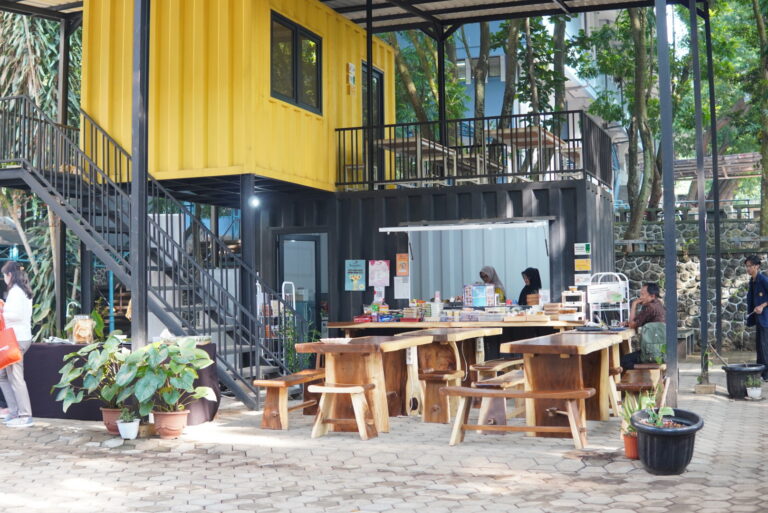
Thurfah Mahira Ahnaf Health and well-being stand as one of the core pillars of the Sustainable Development Goals (SDGs) Goal 3: Good Health and Well-being. Targets 3.a and 3.9 specifically emphasize the control of tobacco consumption and the prevention of exposure to tobacco smoke in public spaces, in line with the spirit of the Framework Convention on Tobacco Control (FCTC). Within a campus environment, these efforts are best realized through the implementation of smoke-free facilities while still providing designated spaces for smokers, ensuring that the rights and comfort of all individuals are respected. One notable example can be found at Shokudo, the student canteen of the Faculty of Cultural Sciences (FIB), Universitas Padjadjaran. The canteen is equipped with a designated outdoor smoking area, serving as an effective solution to maintain collective comfort. This separation protects non-smoking students and faculty members from passive smoke exposure, enabling them to enjoy their time in the canteen in a healthier and safer environment. At the same time, the arrangement allows smokers to comply with regulations without creating unnecessary tension, striking a balance between discipline and inclusivity. The management of Shokudo exemplifies a positive spatial arrangement: a smoke-free zone inside the canteen and a designated smoking area outside in the open air. The division is made clear with visible signage “No Smoking” signs prominently displayed inside the canteen, and clear markers in the outdoor area indicating the designated smoking zone. This system demonstrates not only the faculty’s concern for community health, but also how a simple spatial strategy can generate a profound impact on the quality of the learning and dining environment. Shokudo thus stands as a tangible example of how campus facilities can embody the principles of comfort, health, and adherence to SDG 3: Good Health and Well-being. Beyond comfort, the existence of a smoking area at Shokudo also strengthens FIB Unpad’s reputation as an academic environment that cares deeply about the health and well-being of its community. The separation of spaces serves as a subtle yet powerful form of education, reminding students and staff alike that protecting shared health is an integral part of academic culture. With this simple yet impactful initiative, Shokudo FIB Unpad contributes directly to the achievement of SDG 3 by creating a dining space that is welcoming, healthy, and inclusive for all.

News, SDG 2025

From Pesantren to Green Future: Building Digital Resilience for Sustainable Communities

Jatinangor, September 1st, 2025 — Universitas Padjadjaran continues to strengthen its commitment to the Sustainable Development Goals, particularly SDG 4 on Quality Education, through its third-year Community Service (PPM) program at Pondok Pesantren Daarul Uluum Jatinangor. This initiative, titled Community Empowerment through Sustainable Islamic Boarding School Business Resilience Based on Green Economy, builds upon the work carried out in the previous year, extending the pesantren’s role beyond education to include sustainable development and digital innovation. In this third year, the program focuses on developing a Digital IT Web Platform for pesantren as a way to modernize management systems while also opening pathways to new forms of employment and sustainable investment. The application of a green economy model within Pondok Pesantren Daarul Uluum aims to enhance the curriculum by drawing on local land and environmental resources, provide vocational skills training rooted in local wisdom, and create sustainable pesantren-based products that are relevant to today’s economy. On May 31, 2025, the Unpad team held an outreach education session at Daarul Uluum Jatinangor with guest lecturer Ekky Fauza Maulana, ST, Head of the Digital Department at HEBITREN, who introduced participants to the key steps in the Islamic boarding school’s web development. The session covered strategic mapping, an introduction to the concepts of web-based digitization, and hands-on practice in creating and applying digital platforms. The event applied a participatory approach, with the Islamic boarding school community directly involved as the main actors of change while the lecturers acted as facilitators. Looking ahead, the program will continue to refine the Islamic boarding school’s web initiative and prepare a training module as a long-term guide for digital and green-based pesantren development. The team is also targeting academic outputs, including intellectual property registration and journal publications, to ensure that the knowledge created can be shared more widely. More than just a technical project, the program represents a step towards preparing the next generation of Islamic boarding school students for Indonesia Emas 2045, while fostering collaboration with pesantren networks and community-based organizations. Through this initiative, Daarul Uluum Jatinangor stands as a model of how Islamic boarding schools can embrace digital transformation and the principles of the green economy at the same time. It demonstrates that Islamic boarding schools, deeply rooted in tradition, can also be at the forefront of building resilient and sustainable communities for the future. By Dhia Anaulva PutriFakultas Ilmu Budaya

News, SDG 2025

Open Classes, Open Doors: Language Training for All at FIB Unpad

Jatinangor, September 1st, 2025 — When we sat down with Bu Vincentia Tri Handayani, Head of the Language Center at the Faculty of Cultural Sciences (FIB) Universitas Padjadjaran, she began by tracing the center’s long history. “People often think the Language Center started in 2007,” she said, “but the roots go back to the early 1980s with BIPA—Bahasa Indonesia untuk Penutur Asing. That program was part of a government initiative to introduce Indonesian language and culture to the world, and universities like ours were asked to help.”  According to Bu Vincentia, the Language Center itself grew out of a simple need. “Originally, it was just a service to provide English tests for our own campus community. But the demand kept increasing, and soon we were collaborating with government agencies and private institutions. That’s how it developed into what we have now.”  The center isn’t just for students. “Our courses are open to everyone, members of the public as well as the Unpad academic community,” she explained. “We offer a wide range of languages: English, French, Japanese, Russian, German, Arabic, Mandarin, Sundanese, and of course Indonesian for foreign speakers. People are especially interested in private or group classes to prepare for TOEFL, IELTS, TOEIC, or ELT.”  She highlighted how the programs are designed. “Our training team creates modules and materials tailored to each participant’s needs. We regularly update our teaching materials and test questions, and we use an active, practical method so people can really improve their language skills.”  Bu Vincentia added that giving back is part of their mission and that providing free training for faculty staff and lecturers is the faculty’s way of contributing to the community that supports us. For Bu Vincentia, the Language Center has become a meeting point between the university and the wider community. “People come with different goals. Some for work, some for study abroad, some just out of curiosity,” she noted. “What matters to us is that they find a place where learning a language is practical and accessible.” By Dhia Anaulva PutriFakultas Ilmu Budaya

News, SDG 2025

Sparking Growth for Coffee Farmers in Nagarawangi Village

Sumedang, September 1st, 2025 — Nagarawangi Village in Rancakalong, Sumedang, is home to kopi buhun, a distinctive Arabica coffee that has reached local, national, and even international markets. Despite its quality, the product has so far relied mainly on word-of-mouth promotion. To strengthen its presence and ensure sustainable growth, Universitas Padjadjaran is supporting the development of a Coffee Center in the village through its Community Service Program (Pengabdian pada Masyarakat/PPM) in collaboration with students from the KKN Integratif program. The program, titled “Development of the Coffee Center in Nagarawangi Village, Rancakalong District, Sumedang Regency: Improving Literacy, Product Diversification, Brand Awareness, and Cultural Documentation” (Pengembangan Sentra Kopi di Desa Nagarawangi, Kecamatan Rancakalong, Kabupaten Sumedang: Peningkatan Literasi, Diversifikasi Produk, Kesadaran Jenama, dan Dokumentasi Budaya), received funding of Rp7,500,000, with 70% allocated in its initial stage. Running from July 10 to August 10, 2025, the KKN component involved students working directly with local farmers. Their tasks included gathering demographic and agricultural data, documenting coffee cultivation and processing, and learning about the community’s existing marketing practices. Students also contributed by sharing digital skills that are increasingly vital for small producers. They introduced strategies in online marketing, social media management, content creation, packaging design, and logistics management. Another key output is the preparation of a dedicated Kopi Nagarawangi website, designed as a multilingual platform to introduce the product to international buyers. Although still in draft form, the site is expected to become an important gateway for expanding sales beyond the village’s traditional customer base. In addition to this practical work, the PPM team has been preparing an academic article for submission to the PPM Midang journal as part of the project’s scholarly contributions. By combining academic research, student involvement, and community collaboration, the program highlights how universities can contribute to local food security and economic empowerment. For the farmers of Nagarawangi, it is also an important step in ensuring that their heritage coffee continues to thrive in both local and global markets. By Dhia Anaulva PutriFakultas Ilmu Budaya

News, SDG 2025

Community-Based Tourism Development in Jatiroke Village

Sumedang, August 31st, 2025 — Jatiroke Village in Sumedang has long been known for its fresh Arabica coffee, scenic views, and rich cultural traditions. Now, with the support from Universitas Padjadjaran’s Faculty of Cultural Sciences (FIB), the village is taking steps to officially become a Desa Wisata (Tourism Village).  The program is a part of FIB Unpad community service program, which since 2022 has focused on community-based sustainable tourism. This effort ties into the global Sustainable Development Goals (SDGs), especially SDG 2: Zero Hunger, by promoting local food products such as Jatiroke’s own Kopi Gugels.  Located just three kilometers east of Jatinangor, Jatiroke has plenty to offer, from the breathtaking Teras Gunung Geulis viewpoint overlooking Bandung and Sumedang, traditional martial arts and dance performances, to the village’s signature coffee. To further develop its potential, however, Jatiroke requires formal recognition as a Tourism Village by the district government.  To support this process, the Unpad team led by Dr. Vincentia Tri Handayani, M. Hum., is collaborating with local officials and community members to complete the documentation, profiles, and administrative requirements needed for legal recognition. Alongside this, four key activities are being implemented: the installation of tourism signage, capacity-building training for village officials, assistance with the legal process, and the organization of a tourism event to highlight Jatiroke’s cultural and local products.  “With stronger branding and legal status, Jatiroke will be able to promote its natural and cultural treasures more widely, while also boosting the local economy,” explained Dr. Vincentia. Through this collaboration, Unpad hopes to help Jatiroke not only gain the title of Tourism Village but also create a sustainable future where food, culture, and tourism go hand in hand. By Dhia Anaulva PutriFakultas Ilmu Budaya

News, SDG 2025

Empowering Local Entrepreneurs through Branding Support

Sumedang, August 31st, 2025 — A Community Service Program (Pengabdian Kepada Masyarakat/PKM) team from the Faculty of Cultural Sciences, Unpad, launched an scheme titled “Online Business Management and Branding for MSMEs in Margamekar Village” to strengthen the capacity of local micro-entrepreneurs in adapting to the digital era. This activity reflects the university’s commitment to supporting the Sustainable Development Goals (SDGs), particularly in promoting local economic growth, food security, and partnerships with local food producers. Margamekar Village, located in South Sumedang District, has significant economic potential through its diverse micro, small, and medium enterprises (MSMEs), especially in the culinary sector. However, surveys conducted by the PKM team revealed that many local entrepreneurs still face challenges in digital literacy, such as understanding online marketing strategies, producing promotional content, and utilizing social media to expand their market reach. “Through this program, we aim to provide direct assistance so that MSMEs can build a strong brand identity while leveraging digital technology to enhance their competitiveness,” the team reports.  The team has conducted two field surveys to map the needs of MSMEs and identify opportunities for business development. They also visited several production sites, including Nufaras Bitter Melon Chips owned by Bu Siti, Wening Cake & Cookies owned by Bu Tina, and Kue Basah Bu Neni located in Leles Village. From these findings, three MSMEs—Pricilla Frozen Meatballs, Kue Basah Bu Neni, and Wening Cake & Cookies—were selected for intensive assistance. The program also engages university students through a Community Service Internship (KKN) to support the digitalization of branding processes. One of the early outcomes was the creation of a profile and promotional video for Kue Basah Bu Neni, which was shortly after, distributed through social media platforms. Similar content production for other MSMEs is currently in progress. This initiative not only helps increase the visibility and competitiveness of local products in the digital marketplace but also demonstrates the university’s role in bridging access to knowledge, technology, and resources for local food producers. Ultimately, the program is expected to strengthen business sustainability, improve community income, and support the independence of the local economy. By Dhia Anaulva PutriFakultas Ilmu Budaya

News, SDG 2025

Faculty of Cultural Sciences Enhances Village Independence and Welfare in Sumedang Region through Sustainable Community Service Programme

Jatinangor, 30 August 2025 – The Faculty of Cultural Sciences (FIB) at Padjadjaran University remains committed to improving community welfare through its Community Service Programme (PPM). This programme covers Sumedang Regency, including the sub-districts of Jatinangor, South Sumedang, Rancakalong, and Cimanggung. These efforts to improve community welfare are motivated by various issues identified in the field, such as the underutilisation of economic potential and the lack of marketing strategies for products by economic actors. By involving FIB Unpad lecturers, the FIB PPM programme focuses on four village development models, namely Socio-Economic Development, Local Culture-Based Tourism Villages, Pesantren-Based Socio-Economic Village Development, and Cultural Literacy Villages. Through a total of 32 PPM programmes and funds amounting to Rp165,894,000, it is hoped that the villages assisted by FIB Unpad can achieve maximum independence and prosperity through continuous and integrated efforts.

Scroll to Top